
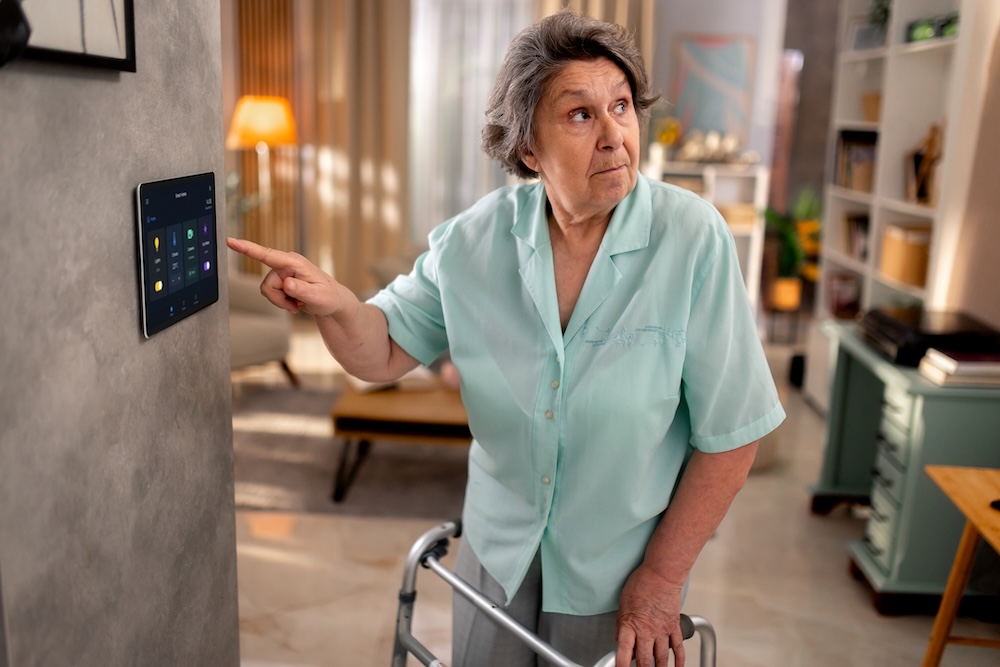
For most of human history, keeping an eye on someone you loved required actually being nearby. You stopped in, made a phone call, or asked a neighbor to check whether everything was okay.
Today, a glance at your phone can tell you that the front door opened at 8:42 a.m., medication was dispensed at 9:03, and someone has been moving around the house since breakfast. Depending on the technology being used, you may even be able to see exactly what’s happening – and it’s having an impact on senior privacy.
That kind of information can be incredibly reassuring when an older family member lives alone. It can help identify potential problems and make remaining at home safer. But access to information also comes with responsibility. Monitoring should provide useful protection without making an older adult feel as though ordinary parts of life are being observed, recorded, or reported back to the family.
Finding that middle ground starts with thinking carefully about what you actually need to know.
Choose Technology With a Purpose
Before adding a monitoring device, try finishing this sentence: “I’m worried that ______.”
The answer might be: my mother will have a fall that goes unnoticed, Dad won’t take his medication, my loved one will wander due to dementia, or another specific safety concern. Once you’ve identified the problem, you can choose technology designed to address it rather than monitoring more of someone’s life than necessary.
For example, concerns about falls don’t automatically require cameras throughout the home. A wearable alert button or strategically placed motion sensor may provide enough protection. If medication is the issue, reminders or an automated dispenser may be more appropriate than a system that tracks someone’s broader activities.
Starting with the concern instead of the gadget helps keep monitoring focused on safety rather than information gathering.
Talk About What “Monitoring” Really Means
It’s difficult to give meaningful consent to something you don’t fully understand. Whenever possible, include your loved one in the decision and explain the technology in practical terms.
Don’t stop at “This sensor lets us know you’re okay.” Explain what it records, what triggers an alert, whether information is stored, and which family members can access it.
You can also ask where your loved one’s boundaries are. They might welcome a device near an exterior door but dislike the idea of one in the bedroom. Location tracking may feel reasonable during certain outings but uncomfortable as a permanent feature. An older adult’s preferences shouldn’t disappear simply because family members are worried.
Involving them in these choices may also make the technology feel more like something being used with them rather than something being used on them.
Set Rules for Yourself, Too
The person being monitored isn’t the only one who needs boundaries. Technology can feed worry rather than reduce it if you find yourself repeatedly opening an app to make sure everything looks normal. One check leads to another, and before long you’re wondering why your loved one hasn’t left the bedroom yet or why the kitchen sensor hasn’t detected movement since lunch.
Establish ahead of time which events require action. A fall alert is very different from a change in someone’s usual breakfast time. A missed medication may deserve a call, while an afternoon spent reading in the bedroom probably deserves no response at all.
If several relatives have access, decide who is responsible for alerts and how information will be shared. Otherwise, one unusual notification can produce three phone calls, two text messages, and an impromptu family investigation into why someone went to the mailbox at an unexpected hour.
Leave Room for Ordinary Life
Privacy isn’t only about keeping certain rooms camera-free. It’s also the freedom to do harmless, everyday things without feeling watched.
Your loved one may change their schedule, go outside unexpectedly, sleep later than usual, invite someone over, or decide to spend half the afternoon doing absolutely nothing productive. Unless there’s a genuine safety concern, those choices don’t necessarily require intervention.
A useful question is: Would I need to know this if technology hadn’t made it so easy to find out?
That simple test can help distinguish information that supports safety from information that merely satisfies curiosity or anxiety.
Keep Adjusting the Balance
What feels appropriate today may change over time. A new diagnosis, fall, medication change, or change in memory could create different safety needs. On the other hand, you may discover that a device generates plenty of data without providing much useful reassurance.
Revisit the arrangement periodically with your loved one. Ask what’s working, what’s intrusive, and whether the technology is still addressing the original concern. Monitoring should be flexible enough to increase when circumstances truly require it and decrease when it doesn’t.
The goal isn’t maximum visibility. It’s enough information to respond to meaningful risks while preserving as much autonomy as circumstances allow.
Some Peace of Mind Comes From People
Even sophisticated technology sees only pieces of what’s happening. A motion detector can tell you someone is moving around the house, but it can’t notice the hesitation when they stand up, hear the worry in their voice, or recognize that they’ve been unusually quiet.
Having someone trusted nearby can sometimes answer the questions that no device can. Compassionate Care Home Health Services provides personalized home care that helps older adults continue living at home while retaining the choices, privacy, and personal space that make independence meaningful.
If you’d like to explore how a little extra support could help someone you love in Saginaw, Traverse City, West Branch, or anywhere else in Central or Northern Michigan, call us at 877.308.1212. We’d be happy to discuss what would help you worry less while allowing your loved one to continue living life on their own terms.